

16 Oktober 2025
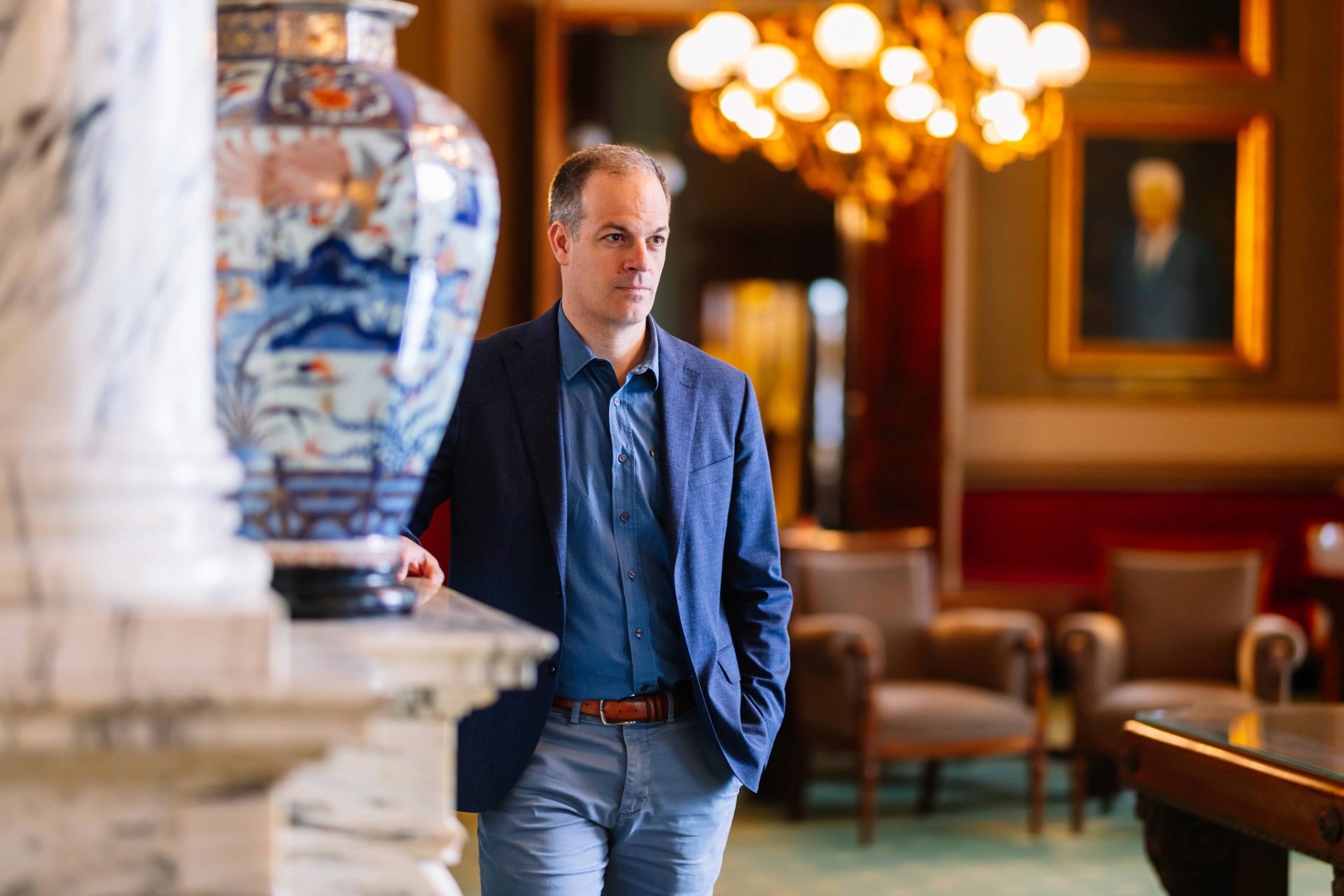
"After almost four years of war, it is unacceptable that European money still finances Putin's war machine," says Member of the European Parliament Sara Matthieu (Green). "This is a victory for both peace and climate."
Brussels, 16 October 2025 - Europe is ending its Russian energy dependency. Thanks to the efforts of the Greens, Russian fossil fuels will be phased out earlier: one year sooner by the end of 2026 for gas and Russian oil from 1 January 2026. "After almost four years of war, it is unacceptable that European money still finances Putin's war machine," says Member of the European Parliament Sara Matthieu (Green). "This is a victory for both peace and climate."
92 million euros of Russian gas via Zeebrugge in September alone
In September 2025 alone, Zeebrugge imported 92 million euros worth of Russian LNG gas, making Belgium the fourth largest EU importer of Russian fossil fuels. "Every month, tens of millions of euros of European money flow into Putin's war chest. Belgium must stop this," says Matthieu. "This ban is not only good for peace, but also for the climate. Moreover, it strengthens our energy independence by focusing on renewable energy."
Local renewable energy instead of Russian imports
The volumes of Russian LNG actually destined for the European market represent less than 0.3% of total EU gas demand. Furthermore, analysts expect LNG demand to decline in the coming years, while numerous new LNG projects will become operational in 2024 and 2025.
"We don't need Russian gas," says Matthieu. "Today it accounts for barely 0.3% of our demand. Conservative politicians who use that argument are deliberately choosing fossil fuel dependency on a war criminal."
No room for exceptions
"In 2024 alone, Russia earned at least 15 billion euros from gas exports to the EU," emphasizes Matthieu. "As long as we continue to import Russian gas, European citizens finance Putin's war and we remain vulnerable to Russian blackmail and price manipulation." Parliament rejects any form of exceptions or loopholes. "Autocratic leaders like Hungary's Orban and Slovakia's Fico want an exemption. They brought this on themselves by not switching to local sustainable energy together with the rest of Europe," says Matthieu. "At a time when unity and determination are urgently needed, we cannot allow room for political opportunism. The EU cannot afford loopholes."
"We replace Russian gas as much as possible with European renewable energy and smart energy efficiency - not with dependence on American gas - that is the only path to true independence," says Matthieu.
Ban also applies after the war
The European Parliament now enters the trilogue with the Council and Commission with a strong bargaining position. "We have closed crucial loopholes and eliminated all exceptions," says Matthieu. "The ban will remain in place even after the war. We have learned painful lessons about energy dependence on Russia. We must never forget them. It is now up to the member states to endorse this."
Groen gebruikt functionele en analytische cookies die noodzakelijk zijn om de website goed te laten functioneren. Deze cookies verwerken geen persoonsgegevens en hier is geen toestemming voor nodig.
Als je daarvoor toestemming geeft, maken we ook gebruik van marketingcookies. Die stellen ons in staat om de website beter af te stemmen op jouw voorkeuren.
Je kunt je instellingen hieronder wijzigen. Ons privacybeleid vind je hier.